
Boom barriers
Boom barriers control vehicle entry and exit at societies, offices, basements and parking lots. Selection depends on boom length, opening speed, duty cycle, safety sensors and access method.
Automation
Automation should make movement, access and safety more controlled, not more complicated. We help residential communities, offices, hotels, hospitals, campuses and industrial sites plan automation products around vehicle flow, pedestrian access, emergency override, security integration, safety sensors, manual fallback and long-term serviceability.
Automation should control movement, access and safety with predictable logic. We evaluate gate width, vehicle flow, duty cycle, safety sensors, access method, fire override, manual release, civil readiness and service support before recommending barriers, bollards, automated doors, parking systems or lift-access automation.
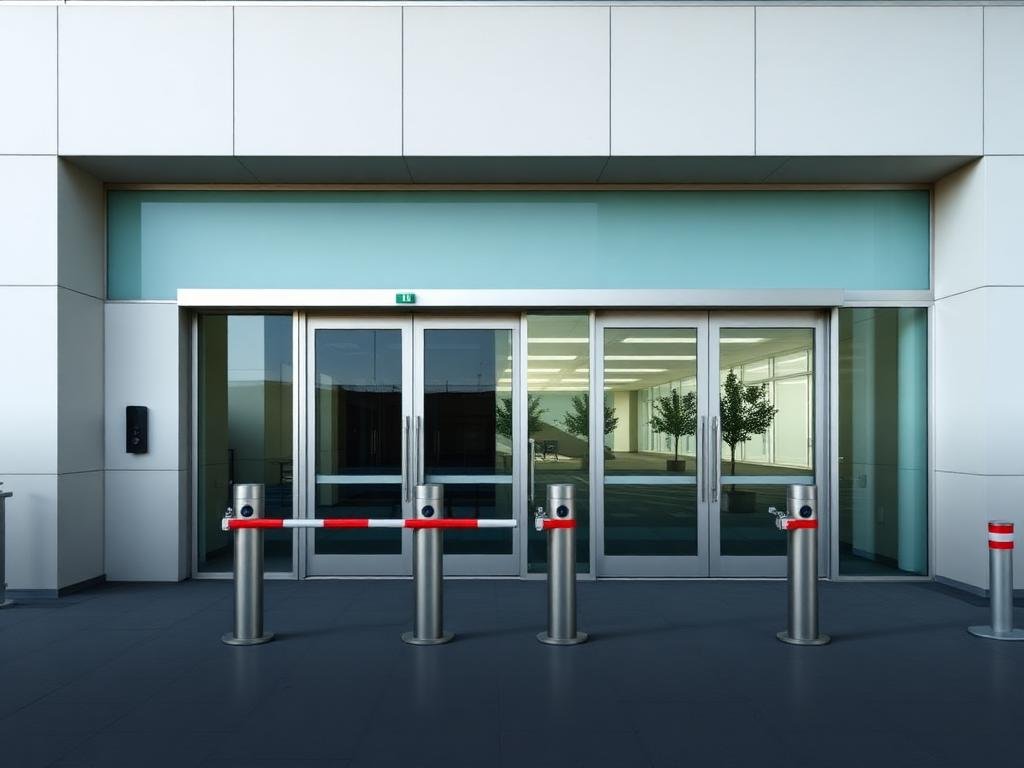
Start here
Automation is not simply a motor added to a gate or a sensor added to a door. It is a controlled movement system: who is allowed, what must open, what must stay locked, what happens in fire or power failure, and how safely the system reacts when people or vehicles are nearby. Good automation combines hardware, access logic, sensors, civil readiness and emergency override.
Boom barriers control vehicle entry and exit at societies, offices, basements and parking lots. Selection depends on boom length, opening speed, duty cycle, safety sensors and access method.
Rising bollards control vehicle access where stronger physical restriction or time-based access is needed. Civil foundation, drainage, impact requirement and manual lowering must be planned early.
Automatic sliding, swing or sensor doors improve movement in lobbies, hospitals, hotels and offices. Door weight, opening width, sensor coverage, safety and fire-release behaviour decide the right system.
Parking systems and lift access controls connect movement permission to users, vehicles, cards, QR codes, tickets or authorised floors. The workflow must be clear before hardware is selected.
A boom barrier, bollard, automatic door, parking system, lift access controller and fire override solve different movement problems. The right architecture starts with the route being controlled and the risk if it fails.
Best for gates, basements, societies, offices and logistics yards where vehicle entry must be controlled, logged or guided by RFID, remote, ticket, QR or ANPR-ready workflows.
Best where people movement must be smooth, hygienic, accessible or controlled, such as lobbies, hospitals, showrooms and restricted internal areas.
Best for buildings where lift access, fire override, emergency release, security lockdown and authorised movement must work together instead of as separate systems.
Go deeper
Once the movement path is clear, these are the concepts that help a buyer compare automation products wisely instead of choosing only by motor size or brand.
Automation should define who can enter, which route they can use, what time they can use it and how exceptions are handled by security or admin teams.
Photocells, loop detectors, radar sensors, safety edges and obstruction logic help prevent barriers or doors from closing on people, vehicles or objects.
Fire alarm integration may require doors, barriers, lifts or locks to release, hold open, disable or follow a defined emergency state. This logic must be documented.
Every automation system needs a practical fallback for power failure, motor fault, sensor issue or emergency operation. Manual release should be demonstrated at handover.
Fast opening improves traffic flow, but speed must be balanced with safety, boom length, motor rating and user behaviour at the entry point.
A lightly used villa gate and a busy office basement need different motors. Duty cycle tells whether the equipment can handle repeated operation without overheating or early wear.
Poor sensor placement causes false triggers, unsafe closing or user frustration. Sensor type and mounting location are part of engineering, not decoration.
UPS, battery backup or manual release determines how the system behaves during power cuts. Critical sites must define the expected behaviour in advance.
Meaning: A ground-loop sensor that detects vehicles near a barrier or gate.
Why it matters: It helps prevent barrier closure on a vehicle and can trigger entry/exit logic.
Meaning: An infrared safety beam used to detect obstruction across a doorway or gate path.
Why it matters: It improves safety by stopping or reversing movement when the path is blocked.
Meaning: How frequently equipment can operate safely over time.
Why it matters: Wrong duty-cycle selection leads to overheating, motor wear and unreliable operation.
Meaning: A mode where the system releases/unlocks during failure or emergency.
Why it matters: Important for fire exits, emergency evacuation and life-safety compliance.
Meaning: A mode where the system remains locked/secure during failure.
Why it matters: Important for restricted or high-security areas, but must be balanced with life safety.
Meaning: Logic where one device state controls or prevents another device action.
Why it matters: Useful for airlocks, safety zones, lift-floor permissions and coordinated emergency behaviour.
Automation datasheets become useful only when matched to the site. Duty cycle, boom length, door weight, sensor type, access input, fire override and manual release matter more than one headline feature.
A practical technical view of what sits behind this product category and what we check before recommending a model.
Vehicle and door automation must detect people, vehicles and obstruction conditions. Loop detectors, photocells, radar sensors, safety edges, limit switches and control panels decide whether automation feels safe and reliable.
RFID cards, UHF tags, QR tickets, biometric/access readers, ANPR-ready workflows, lift controllers and parking software must follow one access policy: who can move, where, when and under which exception.
Fire alarm, emergency evacuation, power failure and security lockdown conditions must be planned before commissioning. A safe automation system includes manual release, battery/UPS planning and documented override behaviour.
Use this as a practical buying map before shortlisting products or asking for a quotation.
View automation productsFor societies, office gates, parking entries and logistics yards where vehicle movement must be controlled and safe.
For restricted roads, premium entrances and time/access-controlled vehicle paths where stronger physical control is needed.
For lobbies, hospitals, hotels, offices and public counters where smooth pedestrian movement and safety sensing matter.
For buildings where vehicle entry, floor access, fire alarm overrides and emergency states must work as a coordinated system.
Share gate width, vehicle flow, pedestrian flow, door type, lift/floor access needs, parking workflow, fire-alarm integration requirement and power-backup expectations. We will help convert this into a practical automation product and installation plan.
Buying notes
Vehicle and pedestrian movement should be mapped before selecting barrier, bollard or door equipment.
Safety sensors, loop detectors, photocells and anti-crush logic are not optional in movement automation.
Manual release and emergency override must be clear for power failure, fire alarm and security incidents.
Access logic should define who can enter, at what time, through which route and under what exception.
Automation products should be selected with duty cycle, motor load, weather exposure and service support in mind.
Installation
These are common ways customers ask us to package this category.
Fingerprint, PIN, RFID, app-controlled and hotel smart locks selected by door type, access flow and serviceability.
Learn moreVisitor video calling, gate communication, indoor monitors, mobile-app VDP and lock-release systems for flats, villas and reception entries.
Learn moreCCTV cameras, NVR/DVR recorders, storage and remote viewing products planned around real coverage goals.
Learn more